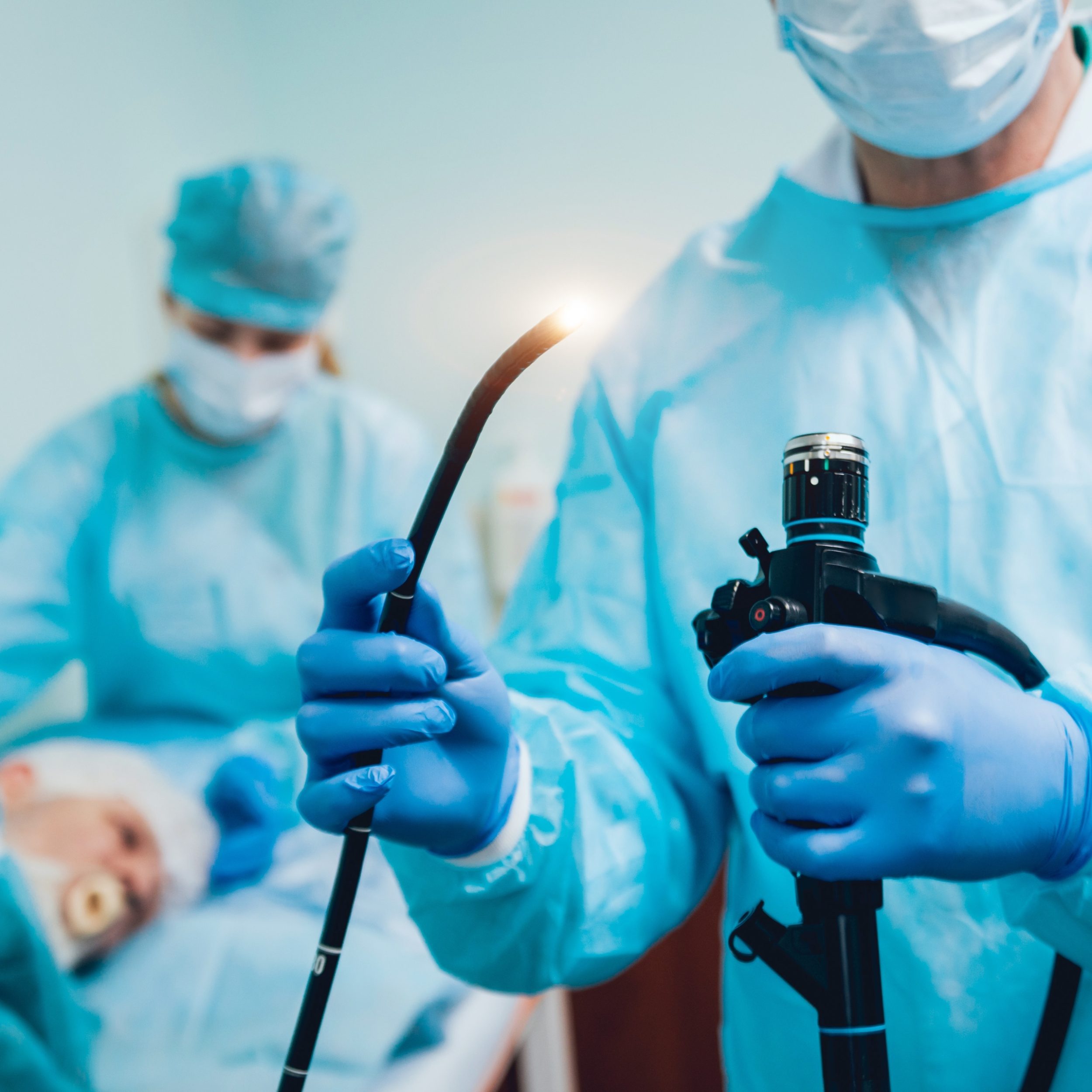
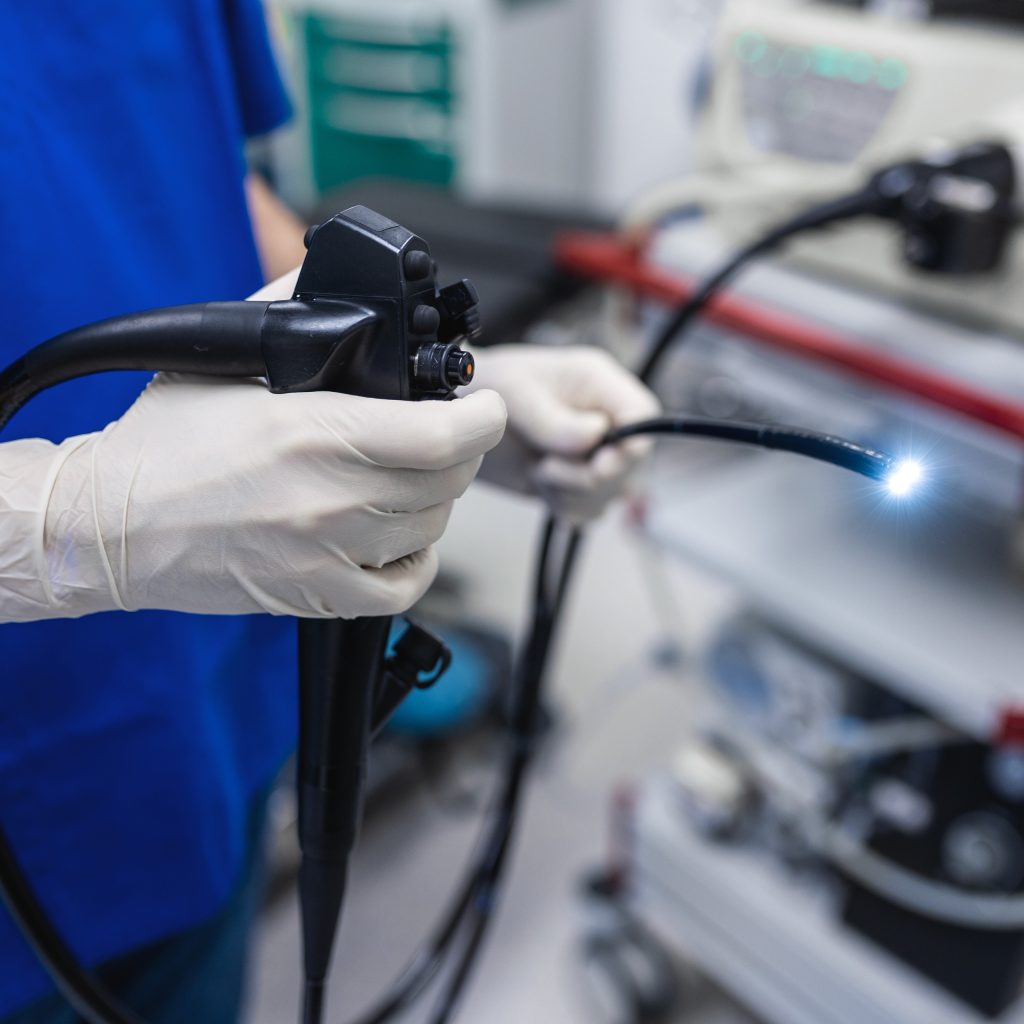
A gastroscopy (you may know it as an endoscopy) is a procedure that uses a thin, flexible tube (endoscope) to examine the oesophagus, stomach, and upper part of the small intestine (duodenum).
The endoscope has a light and small camera at one end, that sends images directly to a screen for the endoscopist to review.
An Upper GI procedure typically takes less than 15 minutes, and you’ll usually be able to go home the same day.
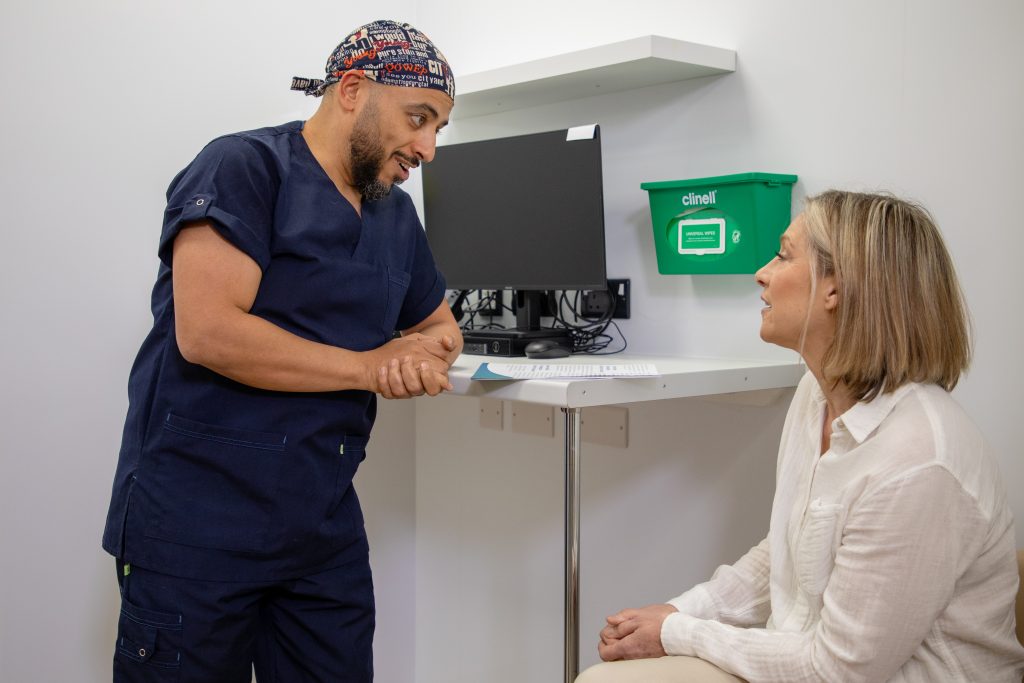
Your Clarity consultant will explain the procedure and be on hand to answer any questions you may have.
Your comfort is essential for the successful completion of the procedure. To ensure your comfort, your throat will be numbed with a local anaesthetic spray before the procedure. You also have the option of receiving a sedative if you prefer, please note that you will still be awake but the sedative will make you drowsy and reduce your awareness about what’s happening.
If you choose to be sedated, you must be accompanied by a responsible adult for 24 hours. During this time, you should avoid work, operating machinery, and making significant life or financial decisions.
Your Clarity consultant will discuss all the options available to you.
While you await your gastroscopy, it’s important to maintain a healthy diet and avoid anything that aggravates your symptoms.
Pre-Procedure Instructions
Once your gastroscopy appointment is scheduled, we will provide you with specific instructions on how to prepare.
Remember: These instructions are general guidelines. Please follow the specific instructions provided by your healthcare provider for your individual case.
Following your procedure, you will be given time to recover from the procedure in a comfortable setting.
If you had throat spray: You will be offered a cold drink once the numbness in your throat has subsided.
If you received sedation:
Important Note:
Driving Restrictions: You will not be able to drive after receiving sedation. Please arrange for someone to escort you home and supervise you for 24 hours.
A gastroscopy is a test that looks at the oesophagus (food pipe), stomach, and the first part of the small intestine using a thin, flexible camera passed through the mouth. A local anaesthetic throat spray is commonly used, and sedation may also be offered to help you relax. This procedure helps diagnose causes of symptoms such as indigestion, difficulty swallowing, abdominal pain, or anaemia, and biopsies can be taken if needed. After the test, you will be monitored until you are safe to go home, and if throat spray has been used you will need to wait at least one hour before eating or drinking.
We’ll spray your throat with local anaesthetic to reduce the gag reflex. As the endoscope goes down, you may feel like you’re swallowing. There might be some gagging initially, but this usually settles.
You’ll be able to breathe normally throughout. The procedure typically takes 15-20 minutes.
Gastroscopy is very safe. Serious complications occur in less than 1 in 10,000 procedures.
Possible risks include:
The benefits of diagnosis far outweigh these small risks for most patients.
You can stop the procedure at any time. Simply inform the team or, if having a gastroscopy where speaking is difficult, raise your hand. Please do not grab the equipment, as this is unsafe. A nurse will be by your side throughout to monitor your comfort and safety.
Conscious Sedation: You will remain awake but relaxed; it does not “put you to sleep.”
Memory: The sedative may affect your memory of the procedure or post-operative discussions.
Recovery: You may feel drowsy or lightheaded afterwards.
For 24 hours following sedation, you must:
Have a responsible adult stay with you.
Avoid driving or operating machinery.
Refrain from signing legal documents or drinking alcohol.
Rest for the remainder of the day.
Your pre-assessment nurse or the department staff can answer any further questions upon your arrival. Written guidance will also be provided in your post-procedure paperwork and via post.
You must not eat for at least 6 hours before your appointment, and not drink anything for at least 2 hours beforehand. Take your regular medications unless specifically told otherwise.
Arrive 30 minutes early and bring a companion if having sedation. Remove dentures, jewellery, and contact lenses.
During the procedure you will have a nurse accompanying you who oversees your care. They will support you throughout the procedure and help you with any questions or concerns you have. Additionally, they will be monitoring you throughout the procedure and making sure you are as comfortable as possible. Family or friends are not allowed in the endoscopy department.
Most patients do not feel the biopsy at all. Occasionally you might feel a brief tug or pinch, but it is not painful. Biopsies are very safe and routine.
Once your procedure has finished, and you are more alert (if you have had sedation), we will inform you of the results of the procedure where possible. However, if during the procedure any biopsies or sampling has been taken, then these results can take a few weeks to be processed. We will let you know how to attain the results of these results.
Inform us of all allergies when booking and remind staff on arrival. We need to know about reactions to latex, medications, or contrast agents. We can usually accommodate most allergies by using alternative medications or equipment.
Your safety is paramount and we’ll adjust our approach accordingly.
Don’t panic – ‘abnormal’ doesn’t always mean serious. Many abnormal findings are treatable conditions like inflammation or benign polyps.
If urgent action is needed, we’ll contact you quickly. Otherwise, results will be sent to your GP who will discuss them with you and arrange any necessary follow-up.
No, when undergoing a Gastroscopy you do not need to remove your clothes. We will cover you with a sheet to protect your clothes.
Usually yes, continue your blood pressure medication as normal with small sips of water, even during the fasting period. However, always check your specific pre-procedure instructions or contact the unit if you’re unsure.
Stopping blood pressure medication can be dangerous.
Bring:
If you are having sedation, please bring someone to drive you home
You can bring someone for support, and it’s required if you’re having sedation. They can usually stay with you until you go into the procedure room and will be called when you’re ready to go home. They cannot typically stay during the procedure itself for safety and space reasons.
Unfortunately, Clarity are unable to offer this procedure to patients that have a pacemaker.
Biopsy results typically take 10-14 working days. Urgent samples may be processed faster. Results are sent to your GP and you’ll receive a copy by post.
If results show anything requiring urgent attention, we’ll contact you sooner. No news within 2-3 weeks means you should contact your GP.
If you had no sedation, you can eat and drink as soon as you feel ready. If you had throat spray for gastroscopy, wait until the numbness wears off (about 1 hour) to avoid choking.
If you had sedation, start with sips of water when you feel alert, then light foods once you’re home.
You’ll spend 30-60 minutes in recovery until the sedation wears off enough for you to go home safely. You may feel drowsy for the rest of the day.
Don’t drive, operate machinery, make important decisions, or drink alcohol for 24 hours after sedation.
Yes, if you’re having the procedure without sedation, you can watch the monitor and the endoscopist can explain what they’re seeing. Many patients find this interesting and reassuring.
If you have sedation, you’ll be too drowsy to follow what’s happening but can ask for photos afterward.
Yes, many patients successfully have endoscopy without sedation. This means you can drive yourself home and get back to normal activities sooner.
You can always ask for sedation during the procedure if you change your mind.
Sedation is medication given through a small cannula in your hand to make you drowsy and relaxed during the procedure. It’s not a general anaesthetic – you’ll be conscious but comfortable.
If you have sedation, you will not be able to drive for 24 hours and you’ll need someone to collect you.
Most patients find the procedure uncomfortable rather than painful. For gastroscopy, you may feel gagging initially.
We can offer sedation to make you more comfortable to help with any discomfort during the procedure.
If you have sedation or pain relief medication during your procedure, you cannot drive for 24 hours afterwards and must have someone accompany you home. If you have the procedure without sedation, you can drive home yourself.
This is for your safety and is a strict requirement.
If you are diabetic the pre-assessment nurse will advise about adjusting insulin or diabetes medications.
Monitor your blood sugar more frequently and bring glucose tablets to the appointment.
This depends on why you take them and your medical history. For diagnostic procedures, aspirin usually continues. Warfarin, DOACs, or clopidogrel may need stopping if biopsies are likely. The pre-assessment nurse will advise you on this.
Never stop these medications without consulting your doctor or our unit first, as this could be dangerous.
Continue most medications as normal, but some need stopping or adjusting. The pre-assessment nurse will advise you on your current medication.
Always check your pre-procedure letter or call us if unsure.
How long you stay in the endoscopy department will depend on what procedure you have, if you have sedation for the procedure, and how you feel after the procedure.
Different procedures take different lengths of time; additionally, the recovery period may vary depending on what procedure you have had. After any procedure we ensure that you are safe to be discharged from the department, if you have had sedation for your procedure this may impact the time, we wish to monitor you prior to being discharged.
Whilst we strive to keep waiting time to a minimum, occasionally lists run late, or procedure take longer than anticipated. If this does happen during your visit the nursing team will keep you informed throughout your stay
Got another question? Speak to our team to find out more. Contact Us